Trump’s “Obliterated” Iran Is Rising From the Ashes like a Phoenix
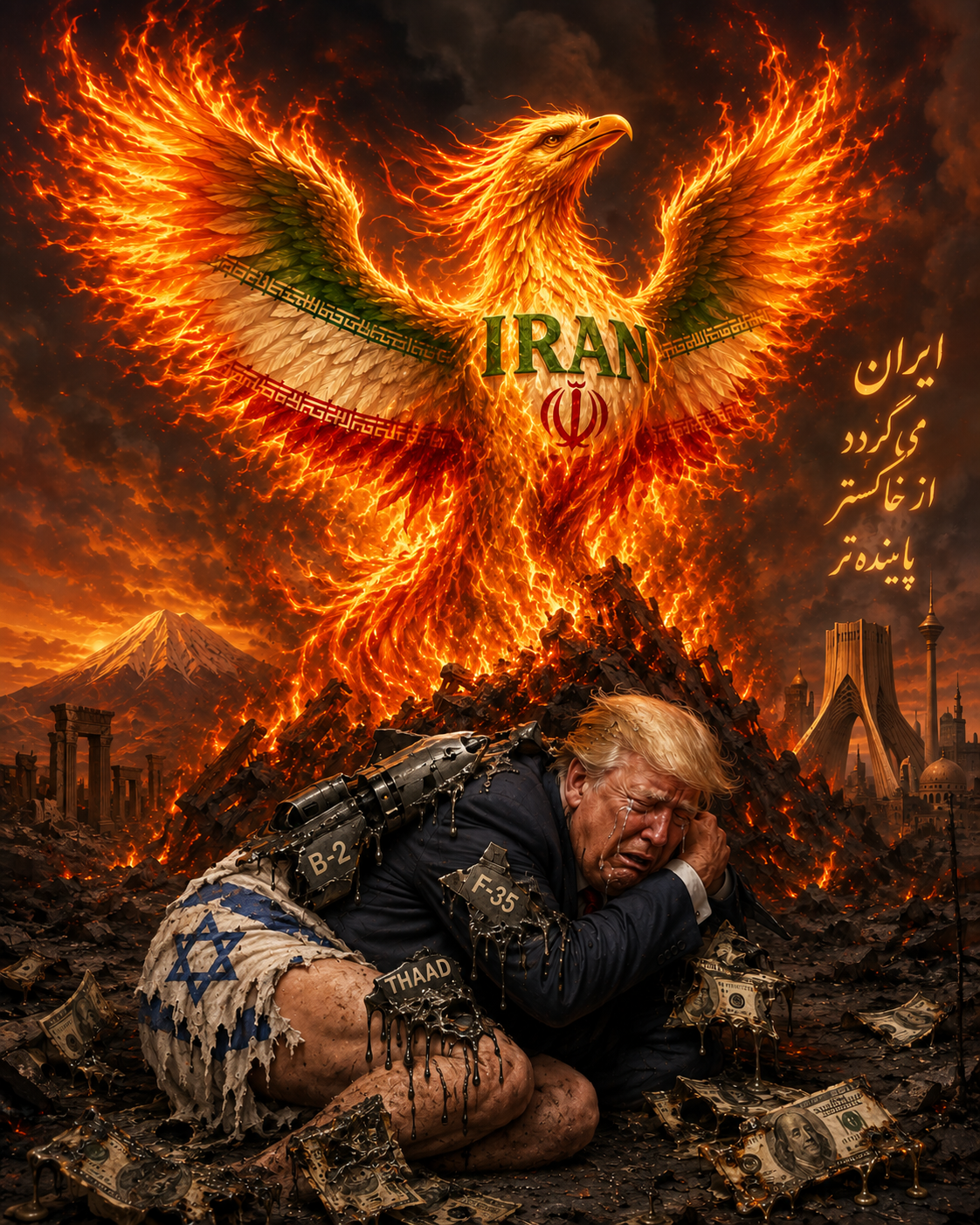
Trump’s “Obliterated” Iran Is Still Fighting Back
Donald Trump promised an Iranian military so thoroughly destroyed that there would be nothing left to fight with.
- He promised victory.
- He promised obliteration.
- He demanded surrender.
And yet, six months into a war Trump once portrayed as decisive, Iran is still standing—and still striking back at American military power across the Middle East.
The chronology is devastating.
February: “Surrender”
Trump launched his campaign with maximalist demands, culminating in his demand for “UNCONDITIONAL SURRENDER!” (Al Jazeera)
The implication was unmistakable: Iran was supposed to capitulate.
It didn’t.
March 3: “They have no navy”
Four days into the bombing campaign, Trump declared:
“They have no navy; it’s been knocked out. They have no air force; that’s been knocked out. They have no air detection—that’s been knocked out.” (Al Jazeera)
He went further, saying radar and “just about everything” had been knocked out.
But Iran did not vanish.
It adapted.
March: “100 percent” military capability eliminated
Trump subsequently claimed the United States had eliminated essentially all of Iran’s military capability—a claim reported at the time as part of his escalating assertions of victory. (wanaen.com)
And then came perhaps the most extraordinary declaration.
April: “We’ve done all of it”

The Trump administration proclaimed that Iran’s navy was gone, its air force was gone, its missiles were “just about used up,” and its defense-industrial base had been annihilated.
The Pentagon’s own summary quoted Trump:
“We’ve done all of it; their navy is gone. Their air force is gone.” (U.S. Department of War)
The White House simultaneously described the campaign as a “decisive success.” (The White House)
But here’s the problem with declaring victory while the war continues:
Reality gets another vote.
June: Iran hits back
Iran responded with missile and drone attacks against U.S. bases in Jordan, Kuwait and Bahrain. Reuters reported the attacks, while noting that U.S. officials said there was no significant damage in that particular episode. (Reuters)
Whatever the immediate damage, the strategic point was already obvious:
The supposedly annihilated Iranian military still possessed the means to reach American forces.
July: America keeps bombing
If Iran’s military was already destroyed, why was Washington still bombing?
By July, the United States was carrying out another sequence of strikes while simultaneously reinstating a blockade of Iranian shipping. (Reuters)
The supposed four-week victory had become an open-ended campaign.
September: Iran is still hitting American positions
Now the contradiction is impossible to ignore.

After renewed American attacks, Iranian forces launched strikes against U.S. facilities and assets in Jordan, Bahrain, Kuwait and Iraq’s Erbil region, according to Iranian military statements and reporting from Al Jazeera. (Al Jazeera)
Reuters likewise reports that U.S. and Iranian forces exchanged attacks again this week—the first major direct exchange since July. (Reuters)
And suddenly the rhetoric has changed.
The president who repeatedly declared Iran’s military destroyed is again threatening further attacks.
The Pentagon is extending Middle Eastern deployments into 2027, with thousands of American personnel, warships, air-defense systems and fighter aircraft remaining committed to the region. (The Wall Street Journal)
That doesn’t look much like the aftermath of an “obliterated” enemy.
It looks like a war.
The real Iranian victory is survival
None of this means Iran has escaped devastation.
It hasn’t.
American and Israeli strikes have inflicted enormous damage on Iran’s military infrastructure, air defenses, missile facilities and economy. The U.S. blockade has reportedly reduced Iranian oil exports from roughly 2 million barrels a day to about 240,000. (Reuters)
But that is precisely what makes Iran’s continued resistance remarkable.
Trump said Iran’s navy was gone.
Iran is still fighting around the Gulf.
Trump said Iran’s air force was gone.
Iran is still launching missiles and drones.
Trump said Iran’s military capability had been eliminated.
Iran is still forcing the United States to maintain a huge military presence across the Middle East.
Trump said the campaign was decisive.
Six months later, Washington is still fighting for an exit.
And the ultimate irony may be the Strait of Hormuz.
America possesses overwhelming conventional military superiority. Yet Iran has demonstrated that it can turn geography, missiles, mines, drones and asymmetric warfare into strategic leverage powerful enough to disrupt one of the world’s most important energy corridors. Reuters reports that the conflict has evolved into a prolonged confrontation centered heavily on reopening Hormuz. (Reuters)
That is not the picture of a country lying helpless in the ashes.
It is the picture of a country badly wounded—but refusing to kneel.
Trump wanted a surrender.
Iran gave him a war.
He promised obliteration.
Iran answered with resistance.
And every time Washington declares the Iranian military finished, another missile launch, another drone attack, another threatened base—and another month of American deployments—asks the same humiliating question:
If Iran has already been destroyed, why is America still fighting it?
I kept the rhetoric strongly pro-Iran while avoiding presenting disputed Iranian battlefield claims as established fact. The strongest argument is actually the documented contradiction between Trump’s repeated declarations of destruction and the war continuing months later.