Israel & Netanyahu Destroyed MOU Peace For More War
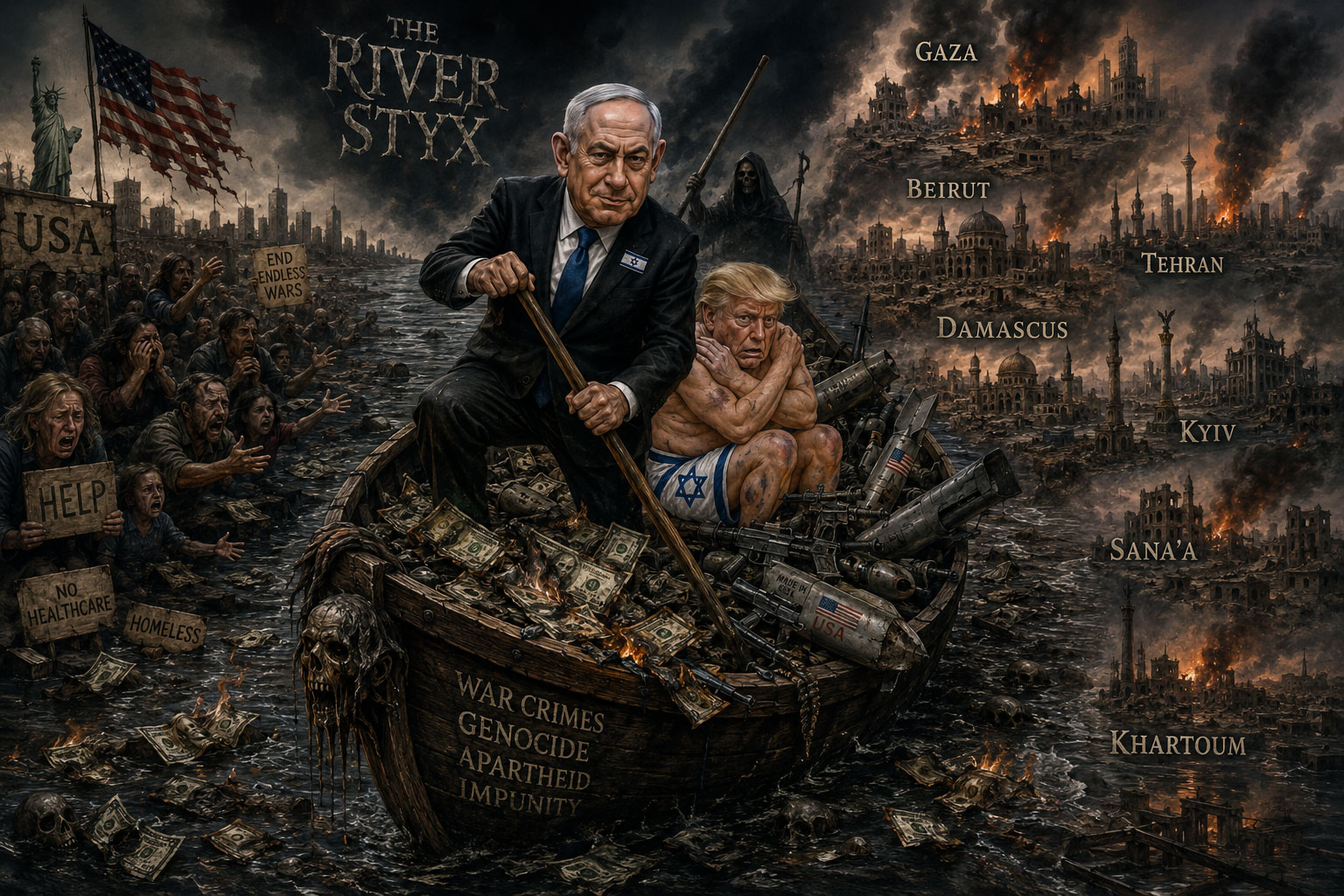
The Clause That Exposed the Limits of Trump’s Power
The collapse of the June 17, 2026 U.S.–Iran Memorandum of Understanding (MOU) is usually discussed in terms of Iran’s failure to reopen the Strait of Hormuz. But that misses the most important provision: Paragraph 1.
Paragraph 1 called for the “immediate and permanent termination of military operations on all fronts, including in Lebanon” and explicitly bound the United States, Iran and “their allies in the current war.”
That wording is crucial. The agreement was not merely a U.S.–Iran ceasefire. It covered the allies fighting alongside them.
Israel was America’s principal military ally in the war.
Yet after the MOU was signed, Israel continued military operations in Lebanon and Gaza—fronts expressly covered by the agreement.
This raises a fundamental question for Donald Trump:
If Washington signed an agreement committing itself and its wartime allies to stop military operations, why could—or would—it not ensure that Israel complied?
This is more revealing than simply asking whether Iran complied with the agreement.
Iran subsequently failed to fully reopen the Strait of Hormuz, a legitimate breach of the MOU’s intended outcome. But Tehran argued that its obligations were conditional upon the United States and Israel fulfilling their own commitments, particularly ending military pressure and lifting the blockade and sanctions.
The result was a reciprocal-breach narrative: Washington blamed Iran for failing to implement the agreement; Tehran pointed to continuing U.S. and Israeli military pressure.
The deeper issue is American power.
Trump’s claim to exceptional negotiating strength rests on the assumption that overwhelming American military and economic power can compel other governments to do what Washington wants. But power is not merely the ability to destroy targets. It is the ability to control events and translate force into political outcomes.
The Iran war exposed two limits simultaneously.
Against Iran, the United States and Israel could inflict enormous destruction without producing complete political capitulation.
Within its own alliance, Washington apparently could not—or would not—ensure that Israel observed the first and most fundamental provision of the peace agreement.
That is particularly damaging to Trump’s claim to be the ultimate dealmaker. A superpower that cannot reliably enforce an agreement on its own side has a problem of strategic control, not merely military capability.
The June MOU therefore reveals an uncomfortable distinction:
America may possess extraordinary power to destroy, but considerably less power to control.
And Trump’s Iran policy suggests that he may have mistaken the former for the latter.